
Career Guidance Topics
The subjects Arun Kumar Saxena writes about, each with the guides, tools and pages that cover it. Looking for one specific page? Try the sitemap. His company site has its own topics page for the MINDSCAN psychometric test and counselling.
These are the career counselling topics I write about, grouped by the stage of life you are at; pick yours. In my experience guiding families, I have seen that reading in the right order saves a lot of confusion.
On this page
After Class 10: choosing a stream
Which stream suits the career you are aiming for.
After Class 12: courses and exams
Degrees, diplomas, government jobs and study abroad.
- How to choose a career after 12th
- Careers after 12th Science without NEET or JEE
- Engineering vs medical after 12th
- Best courses after 12th Commerce
- Career options after 12th in Arts
- Best courses in computer after 12th
- Best diploma courses after 12th
- Skill-based courses in India
- Government jobs after 12th
- Study abroad after 12th
- CBSE board exams 2026 strategy
After graduation
Career options once the degree is done.
Jobs, skills and the job search
First jobs, placements, resumes and well-paid roles.
Career change and the future of work
Switching roles and staying relevant.
Know yourself first
Free tools to understand your strengths before you choose.
Career counselling with Arun
How online sessions work and how to book.
Read these career counselling topics in order

The commonest mistake I see families make is deciding in the wrong order. A child picks Commerce because friends did, or an uncle said it pays well. Then they struggle, switch streams, lose a year. These career counselling topics follow a deliberate sequence. Read ‘Know yourself first‘ before the stream or course pages. It changes everything.
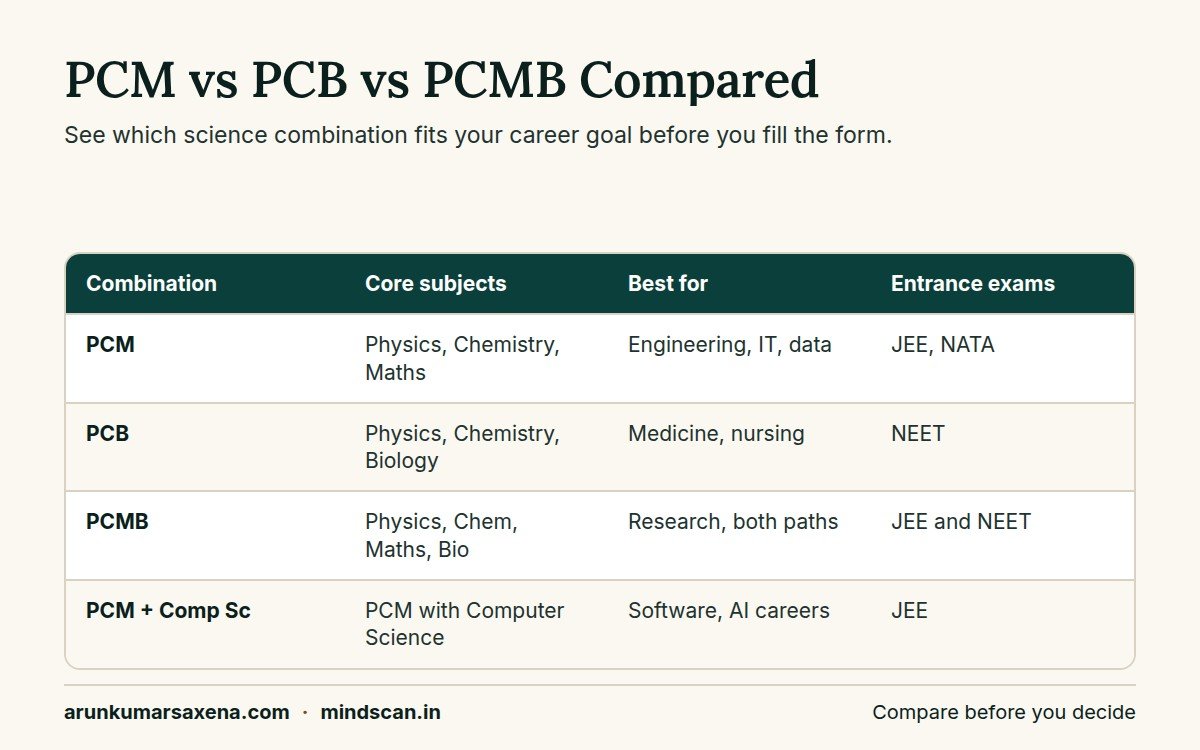
For Class 10 students, the subject choice sets the ground for years. I see bright students pick Science because the family expects it. By Class 11, they realise Physics does not interest them. Among these career counselling topics, the stream pages help you separate fact from pressure. Read them after a self-assessment.
After Class 12, the question becomes: which course, which college, which entrance exam. I see families run from coaching centre to coaching centre without checking if the career fits the student. The career counselling topics under this section cover courses after Science, Commerce, Arts, and the entrance tests that matter. Match them against the strengths your self-assessment revealed.

If you have finished your degree, the career counselling topics on jobs, skills, and the search become relevant. I meet graduates who sent a hundred CVs and heard nothing. The missing piece is usually a lack of clarity about their strengths and the role that suits them. These pages help you build a focused job-search plan.
Many working professionals I speak to are thirty-five or forty and feel stuck. They built a career from a degree they picked at eighteen, and ten years later the spark is gone. The career change and future-of-work pages among these topics help you think clearly before you quit or upskill. I always suggest reading them with a review of your own strengths.

Reading these topics is often enough. Many families decide confidently from them. But when confusion runs deep, a session helps. I or a counsellor from my MINDSCAN team take sessions. They are online, forty-five to sixty minutes, and a parent can stay for the whole session. For live government job listings, check the National Career Service portal.
If you want to go deeper, book a session. Or start by taking the MINDSCAN test. I have used the same report with over twenty thousand students and professionals. It maps your aptitude, interests, and personality to twenty-plus career groups. The 75-page report often makes things clear by itself.
Frequently asked questions
Which career counselling topics matter most after Class 10?
After Class 10, the pages on stream choice matter most. But I always tell families to begin with the ‘Know yourself first’ page. Once you have a clear picture of your interests and strengths, the stream pages make more sense. Rushing into Science or Commerce without that step is the mistake I see most often.
What should I read first after Class 12?
Start with the course and entrance exam pages under this section. They cover what is available after Science, Commerce, and Arts, and the entrance tests that open doors. But the page on ‘Know yourself first’ is still the foundation. I keep seeing students who pick a course because it is popular, then regret it because it does not match their real interests.
Are these career counselling topics useful for working professionals?
Yes, absolutely. Many working professionals I guide are in their thirties or forties and feel stuck. The career change and future-of-work pages give you a framework to think about a switch without panic. I suggest reading them alongside a fresh self-assessment. A small shift in direction often works better than a full restart.
How is a psychometric test different from a school aptitude test?
A school aptitude test usually checks your reasoning and maybe subject knowledge. The MINDSCAN psychometric assessment is broader. It maps your aptitude, interests, and personality and connects them to twenty-plus career groups. You get a 75-page report, much more than a score.
What does counselling cost?
The 75-page MINDSCAN report alone costs ₹1,499. If you want the report plus a one-to-one counselling session, the price is ₹2,999. The session runs online for forty-five to sixty minutes, and you can book it right after the test. I have seen many families find clarity just through the report, but for deeper dilemmas the session is worth it. When you sit with me, we go through the career counselling topics that matter most for your case.
Is everything online?
Yes, the whole process is online. The MINDSCAN test, the report, and the counselling session all run over a video call. You do not need to travel anywhere. I take sessions from nine in the morning to five in the evening, all seven days a week. A parent can attend the full session, no extra charge, just more clarity.
Which career counselling topics help a parent who disagrees with their child’s choice?
I point parents to career counselling topics that build shared understanding. When a parent disagrees with a child’s choice, I ask them to first read about aptitude and interest reports, because these show what the child can do well and what keeps the child engaged. Next, I suggest topics on common myths about streams like Science, Commerce and Humanities. Reading about future career options for each stream also helps parents see that many paths can lead to stable work. I then ask them to read the psychometric test section to see how a measured profile differs from a school mark sheet. This turns a disagreement into a calmer family discussion.
What should a graduate read first when feeling stuck after college?
For a graduate who feels stuck after college, I suggest starting with career counselling topics on self-awareness and transferable skills. These career counselling topics help you list what you enjoyed in your degree, what you are good at, and what you would rather avoid. After that, read about career groups that fit your aptitude, interests and personality. Many graduates realise they can move into roles beyond their subject name. I also ask you to read the sections on further study, internships and skill building before you spend money on another course. This reading gives you a short list of directions and a calmer way to plan the next twelve months.
How often do I add new career counselling topics and how can readers follow them?
I add new career counselling topics regularly, but I do not follow a fixed date. Whenever my MINDSCAN team and I see a repeated question from students, parents or working professionals, I write a plain guide on it. I also refresh older pages when exam rules, course options or industry demand change. To follow these career counselling topics, readers can visit the Career Guidance Topics page on arunkumarsaxena.com, sign up on mindscan.in, or message my team on WhatsApp +91 9140604743. I keep the language simple and grounded in real counselling work, so each new guide adds practical value without any noise.